Past Events
Calculations for a Mission to the Moon
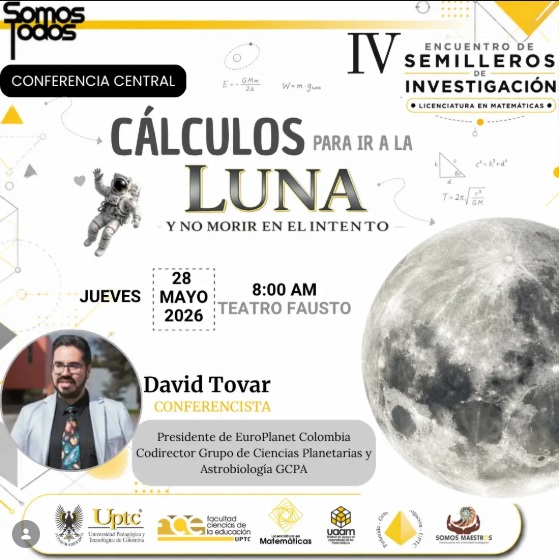
The Mathematics Education Research science club of the Pedagogical and Technological University of Colombia (UPTC) invites you to the keynote lecture delivered by Professor David Tovar, a planetary geologist and astrobiologist, President of Europlanet Colombia, and Co-Director of the Planetary Sciences and Astrobiology Group (GCPA) at the National University of Colombia and CorpoLAGUNA.
This presentation will address the importance of mathematics in the identification of the Moon’s principal physical characteristics and how these mathematical approaches are applied to the calculation of trajectories that enable human beings to orbit the Moon.
📆 May 28 2026
🕗 8:00
📍 Fausto Theater, UPTC University, Tunja, Colombia
The 3rd Workshop on Planetary Science, Astrochemistry, and Astrobiology
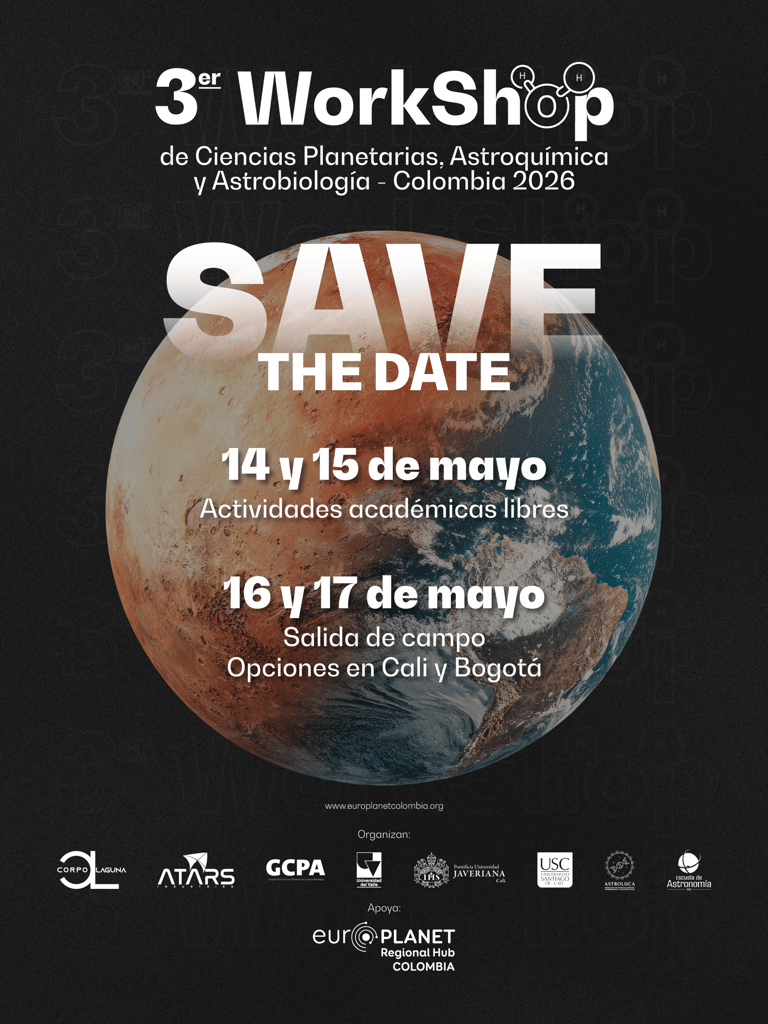
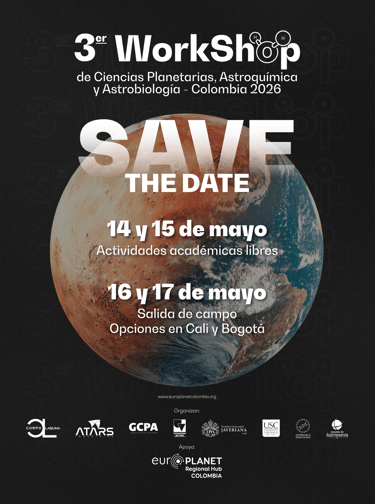
The 3rd Workshop on Planetary Science, Astrochemistry, and Astrobiology – Colombia 2026 will serve as an academic and outreach forum for students, researchers, educators, and all those interested in these frontier fields of knowledge. The event will feature a broad program including lectures, short courses, and field trips, with the aim of fostering knowledge exchange, specialized training, and the development of collaborative networks focused on the study of planets, the chemistry of the cosmos, and the origin, evolution, and search for life in the universe.
The workshop will be held in a hybrid format, with in-person activities taking place in Bogotá and Cali, as well as virtual participation, thereby enabling broader engagement from attendees across different regions and countries. This new edition seeks to further strengthen the planetary science and astrobiology community in Colombia and Latin America. The full event agenda will be announced soon.
📆 May 14 - 17 - 2026
📍 Bogotá - Cali, Colombia
From Antarctica to Mars: Stories of Volcanoes, Ice, and Pyroclastic Processes
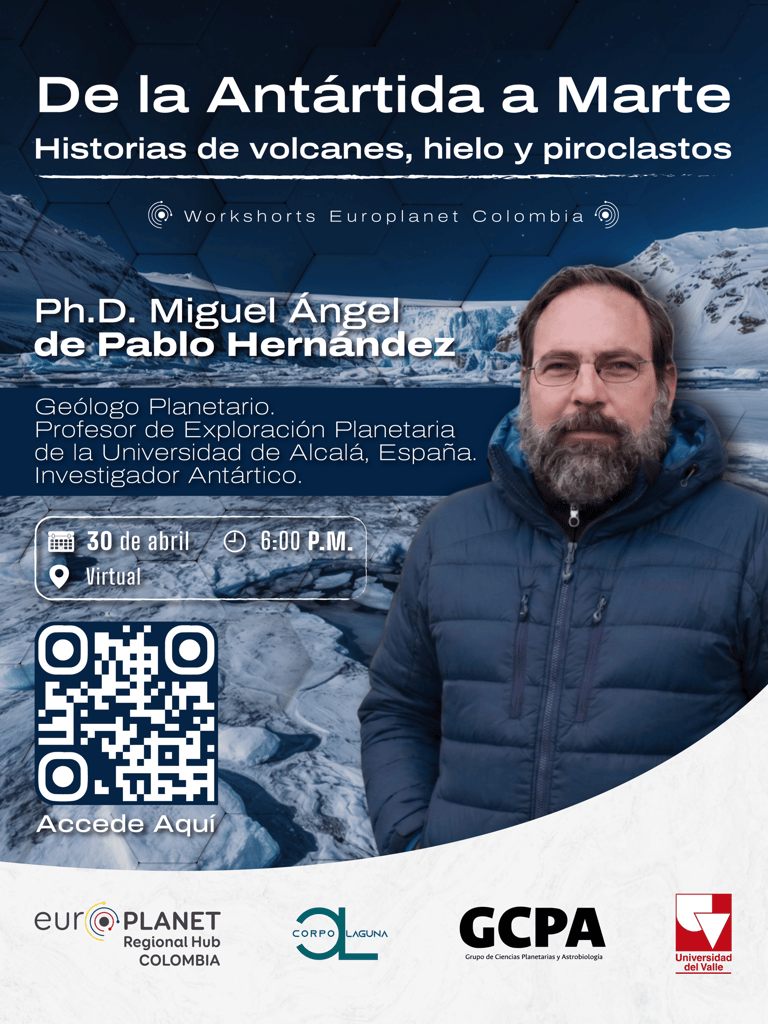
From the extreme landscapes of Antarctica to the volcanic enigmas of Mars, this talk will explore the dynamic interplay between ice, volcanism, and pyroclastic processes across planetary environments. Ph.D. Miguel Ángel de Pablo Hernández, planetary geologist and professor at the University of Alcalá, will share insights from his research and Antarctic field experience, highlighting how these processes shape planetary surfaces and inform our understanding of Earth and beyond. An engaging opportunity to delve into cutting-edge science and expand our perspective on the Solar System.
📆 April 30 - 2026
📍 Virtual
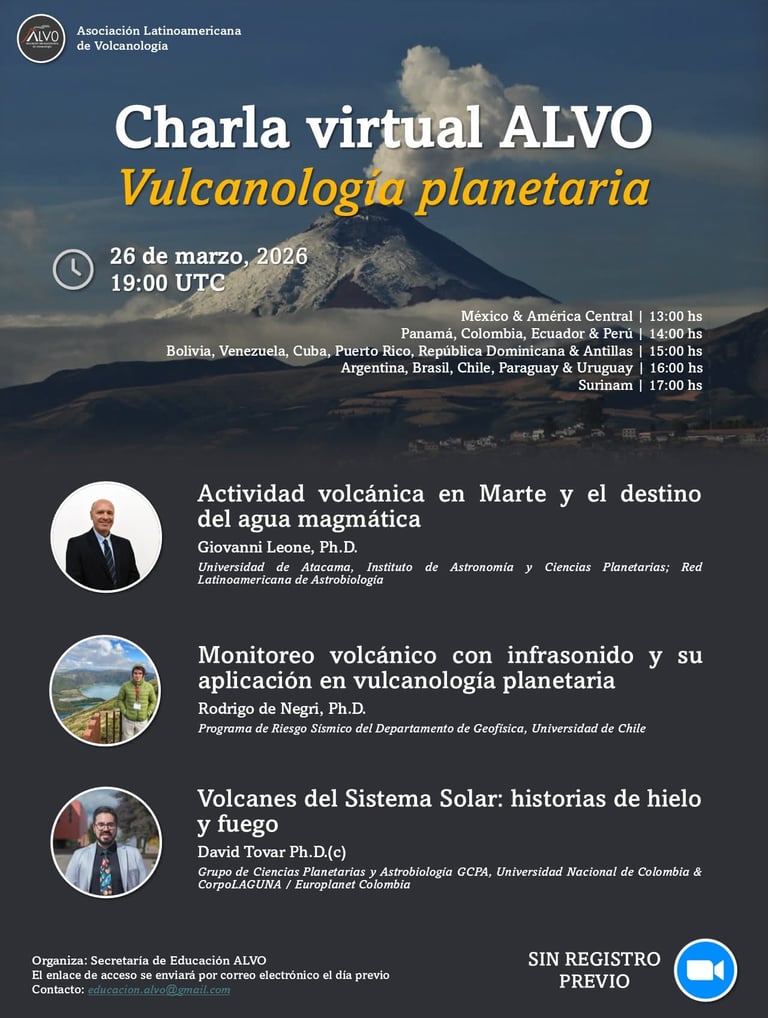
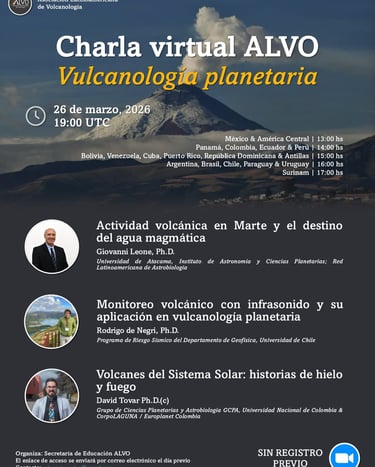
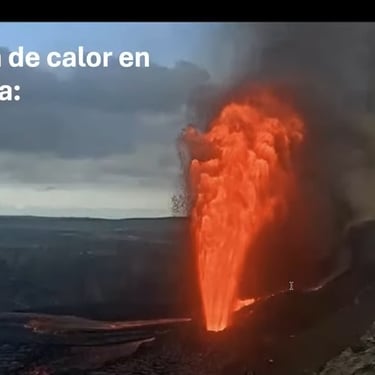
Planetary Volcanology
Planetary Volcanology is an outreach activity organized by the Education Secretariat of the Latin American Association of Volcanology (ALVO) as part of its first virtual lecture series of 2026. In this edition, the program will focus for the first time on planetary volcanology, incorporating an innovative theme proposed by the speakers themselves. The activity seeks to bring audiences closer to the understanding of volcanism beyond Earth, exploring its significance on other bodies of the Solar System and its value for scientific research. It will be held virtually on Thursday, March 26, 2026, with an approximate duration of two hours.
📆 March 26 - 2026
📍 Virtual
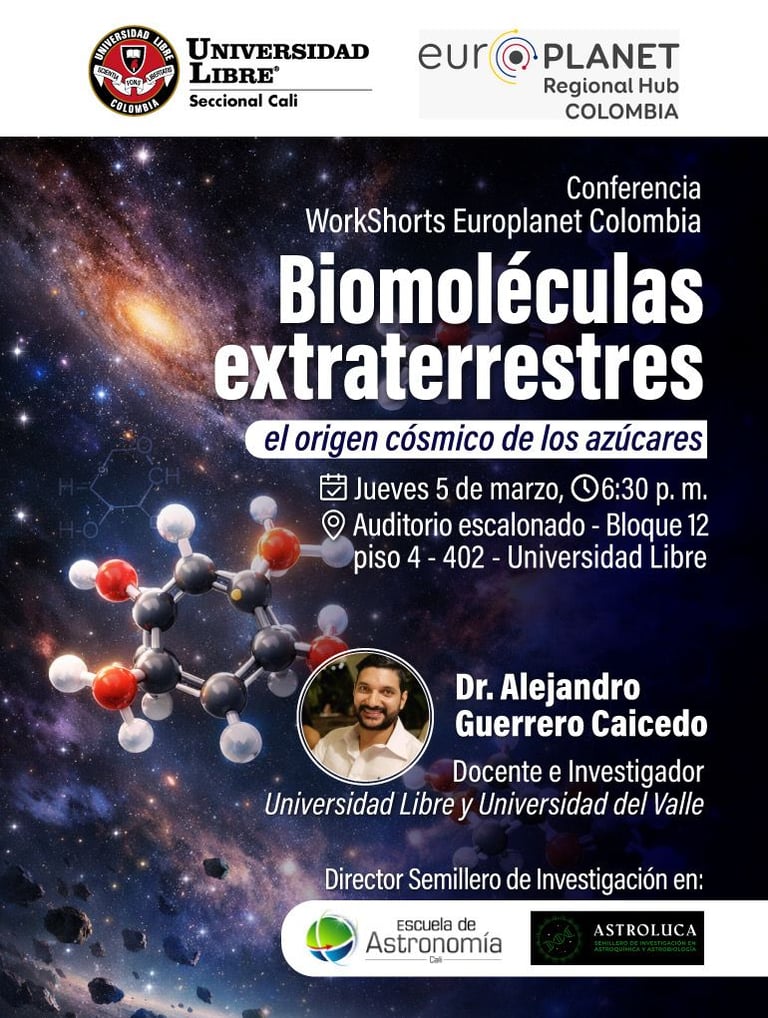
Biomolecules from Beyond Earth: The Cosmic
Origin of Sugars
Biomolecules from Beyond Earth: The Cosmic Origin of Sugars explores how key organic compounds may form in space and what this reveals about the origins of life. This talk will introduce biomolecules, sugars as essential components of biology, and the evidence for organic chemistry in meteorites, comets, and interstellar environments. It will also discuss prebiotic chemistry, astrochemistry, and how extraterrestrial molecules may have contributed to the emergence of life on early Earth.
The event was held on Thursday, March 5th, 2026, from 6:30 p.m. to 7:30 p.m., in hybrid format at the Escalonado Auditorium in Cali, Colombia
📆 March 5 - 2026
📍 Cali - Colombia
Major Geochemical Changes in the History of the Earth
The conference on the history of biogeochemical processes on Earth provided an academic overview of the interactions that have shaped the planet’s chemical evolution through time. It emphasized the role of volcanic activity in releasing key elements such as carbon and sulfur, influencing atmospheric composition and ocean chemistry.
Tectonic processes were highlighted as essential for regulating long-term geochemical cycles through material recycling, weathering, and carbon sequestration. Atmospheric processes were discussed as both drivers and indicators of biogeochemical change, reflecting feedbacks between geological activity and life. Overall, the conference underscored the interconnected influence of volcanic, tectonic, and atmospheric variables on Earth’s geochemical cycles.
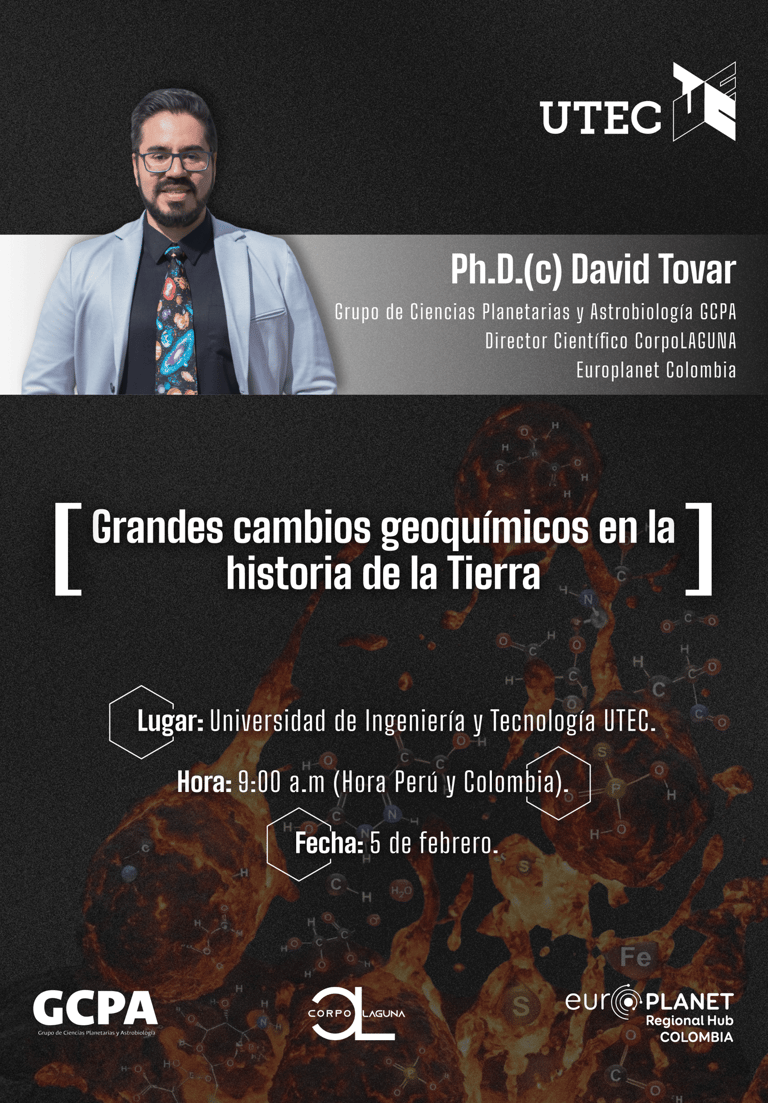
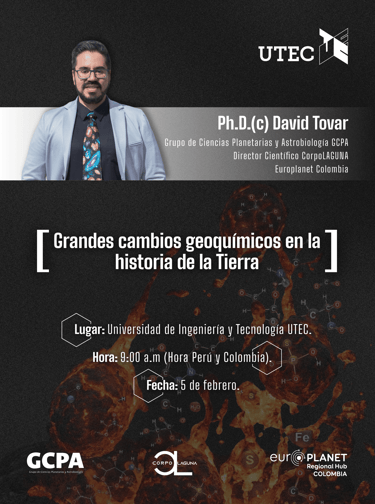
📆 February 5 - 2026
📍 Lima, Perú
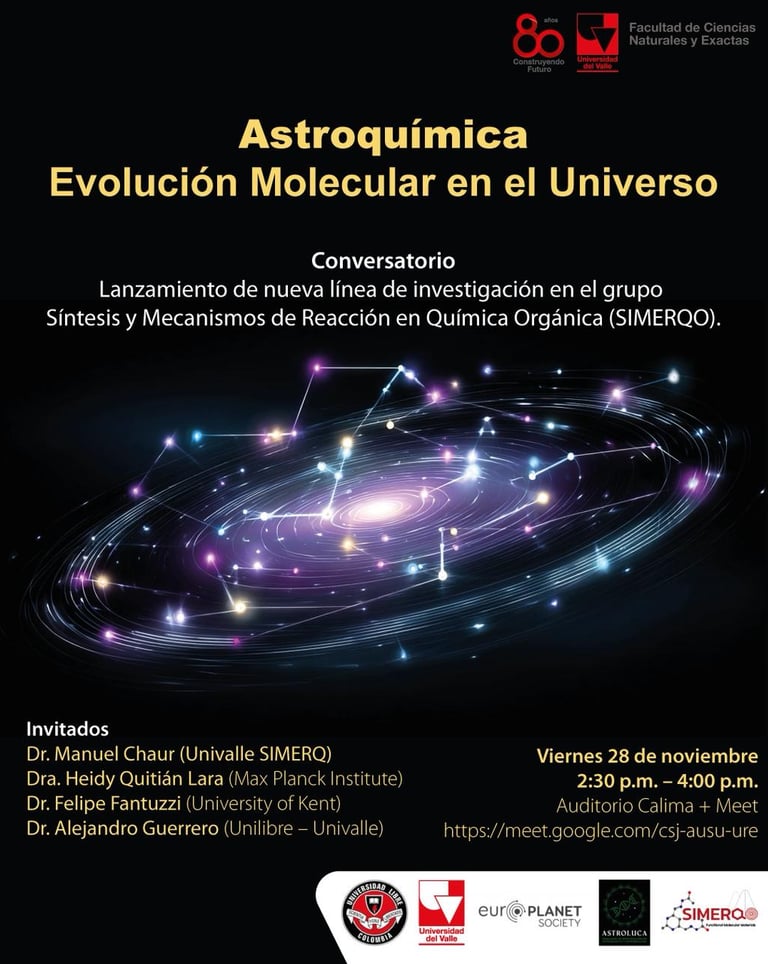
A new scientific line was launched within the Faculty. The SIMERQO Group presented its programme in observational, experimental, and computational astrochemistry, adopting an interdisciplinary approach that integrated astronomy, chemistry, and physics to investigate how molecules form and evolve throughout the Universe.
The launch event introduced the research team, the cooperation agreement with Europlanet, and the AstroLUCA student research group. The event was open to researchers and students engaged in Planetary and Space Sciences and provided a platform for discussion and future collaboration.
The event was held on Friday, November 28 2025, from 2:30 p.m. to 4:00 p.m., in hybrid format at the Calima Auditorium.
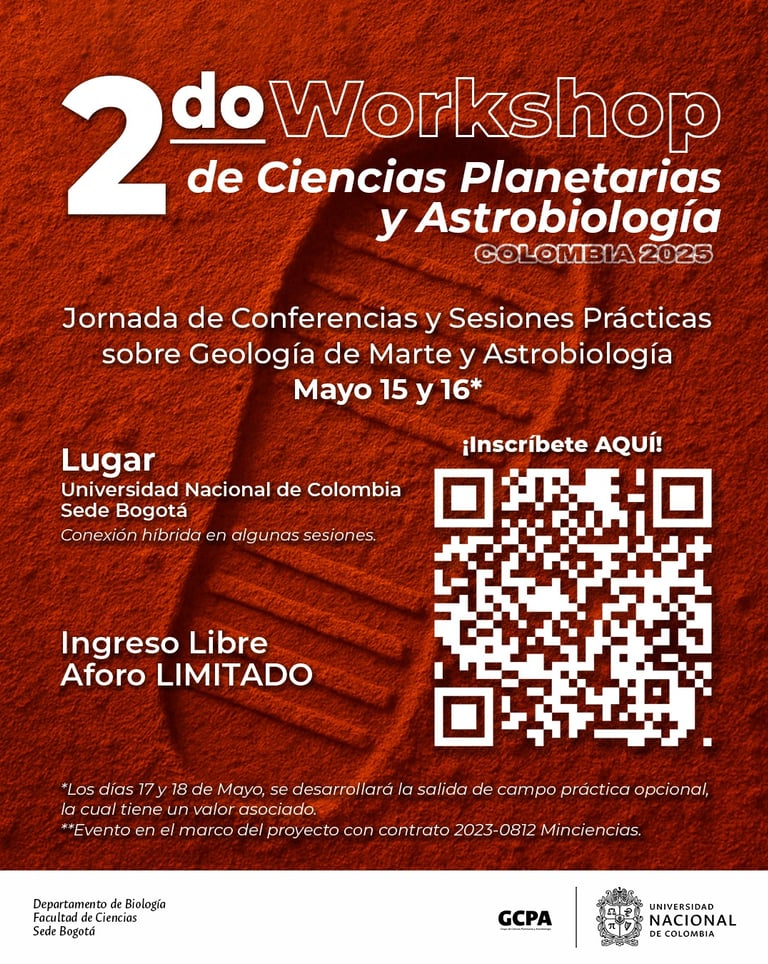
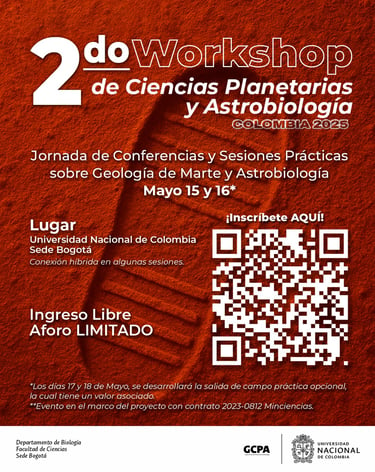
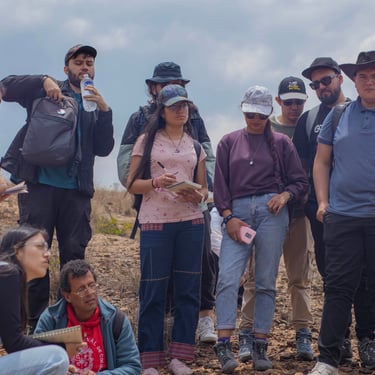
The Second Workshop on Planetary Sciences and Astrobiology – Colombia 2025, held from May 15–18, 2025, at the National University of Colombia, gathered researchers and students to exchange advances in planetary science, astrobiology, and space exploration through lectures, discussions, and collaborative scientific activities. The event included a field trip to the Tatacoa Desert to study geological formations and structures comparable to those observed on rocky bodies across the Solar System.
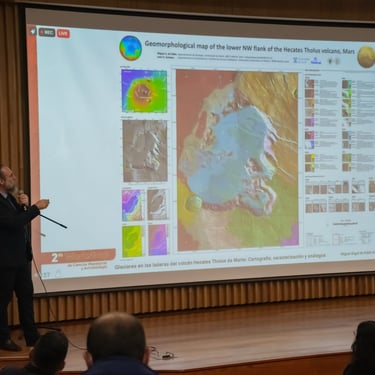
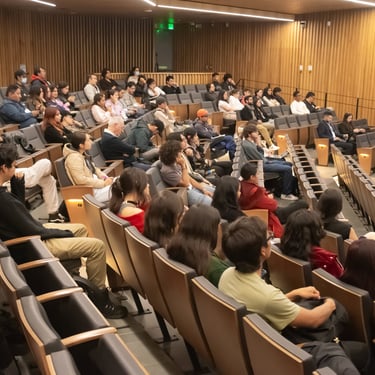
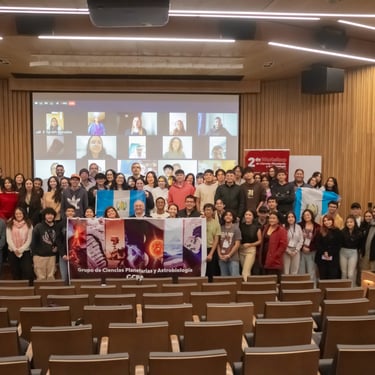
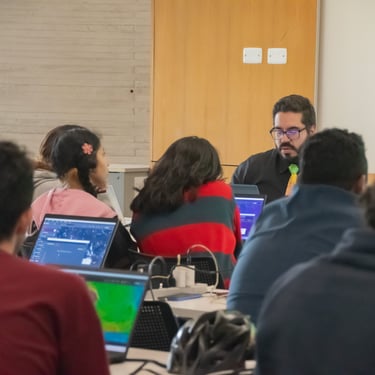
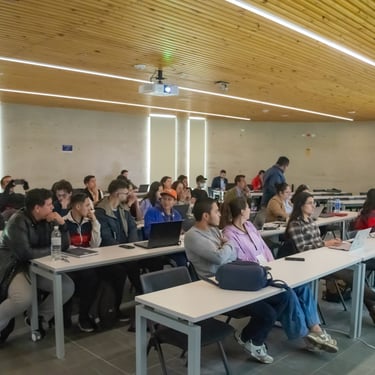
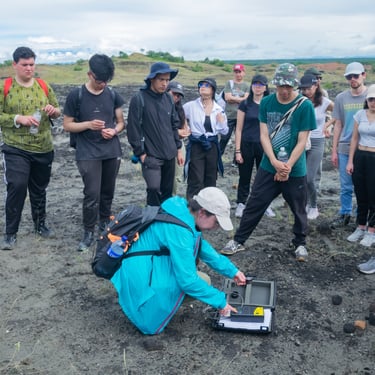
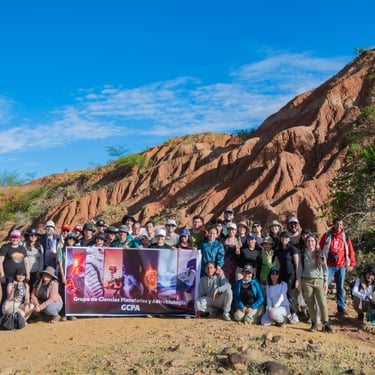
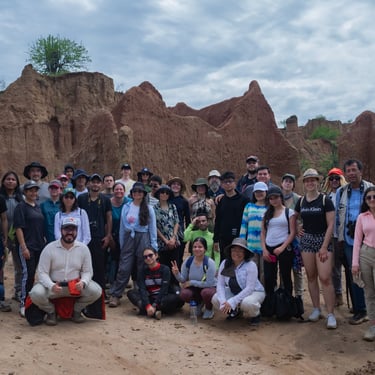
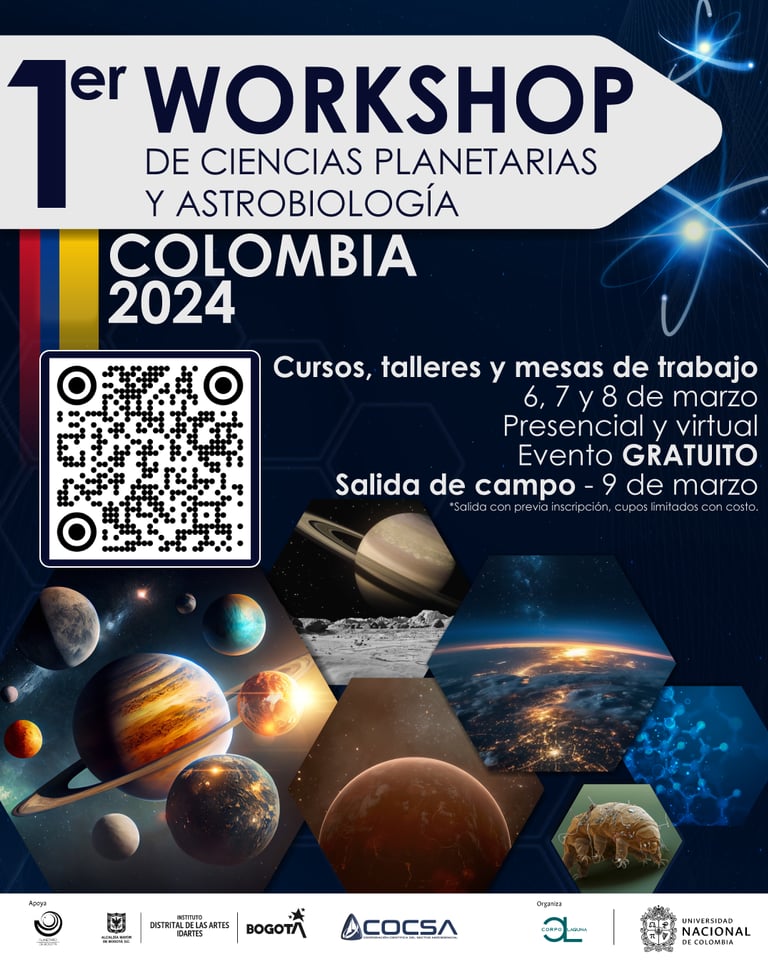
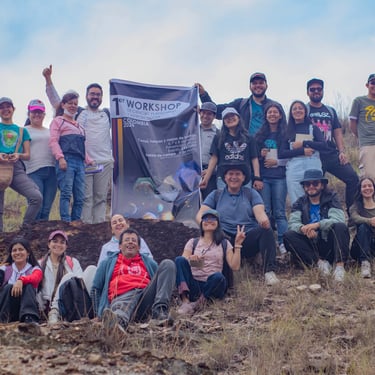
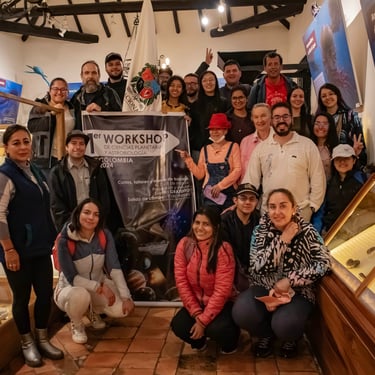
The First Workshop on Planetary Sciences and Astrobiology – Colombia 2024, held from March 6–9, 2024, at the National University of Colombia and the Planetarium of Bogotá, brought together researchers and students to discuss planetary formation, astrobiology, and space exploration through conferences, collaborations, and scientific outreach activities. The event included a field trip to Villa de Leyva to observe geological formations and secondary structures analogous to those identified on Mars.
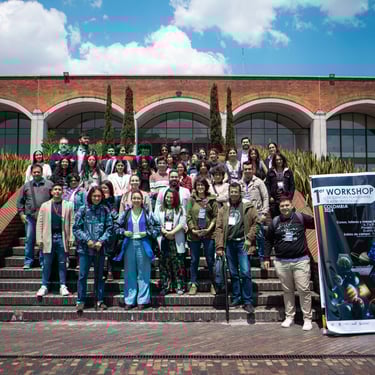
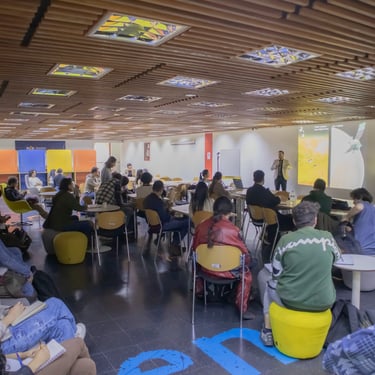
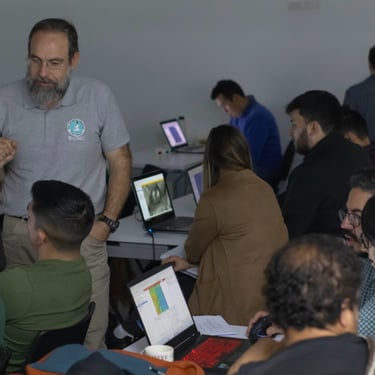
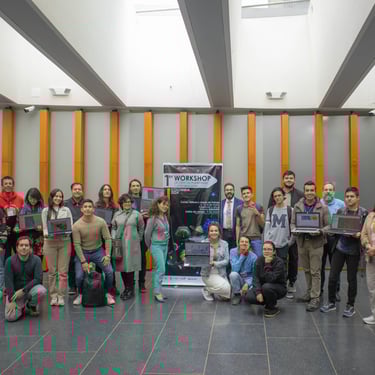
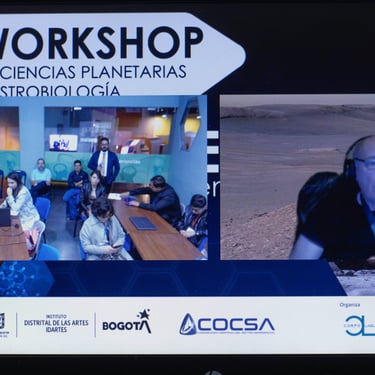
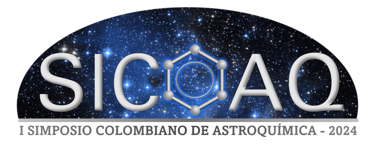
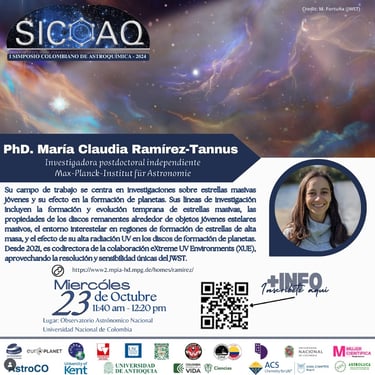
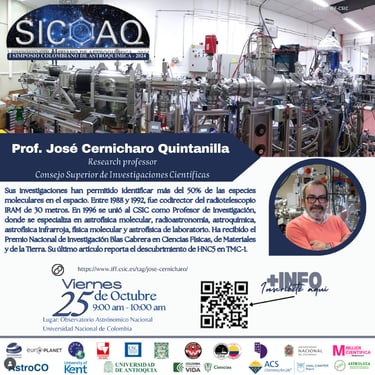
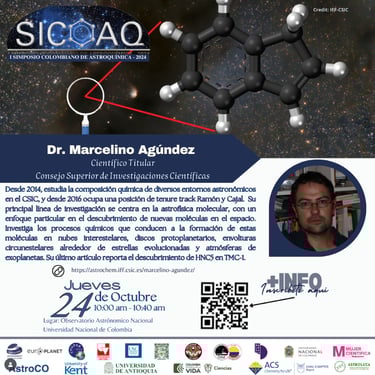
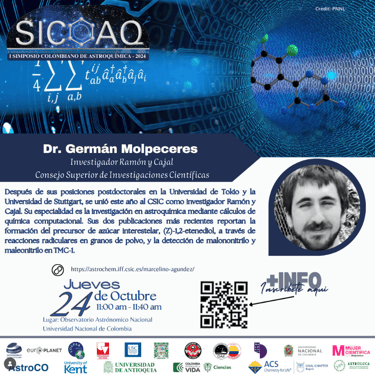
The First Colombian Symposium on Astrochemistry (SICOAQ 2024), held in Bogotá in October 2024, gathered national and international researchers to discuss advances in astrochemical processes, planetary habitability, and interstellar chemistry, fostering collaboration and promoting gender equality within the scientific community.
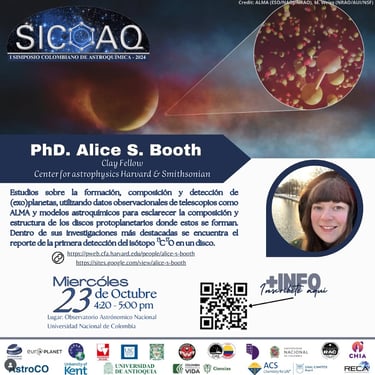
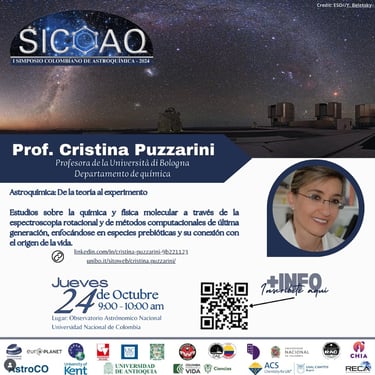
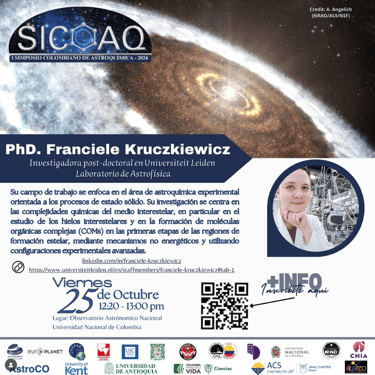
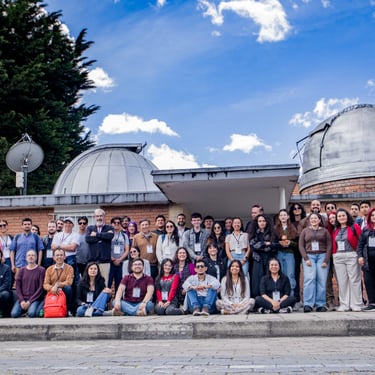
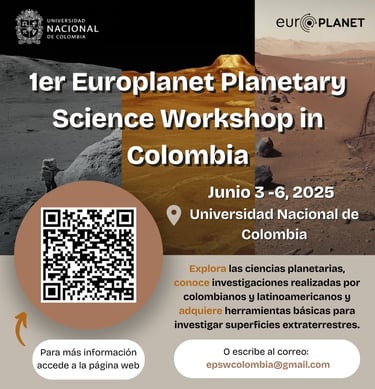
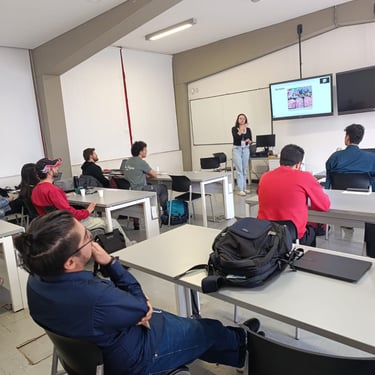
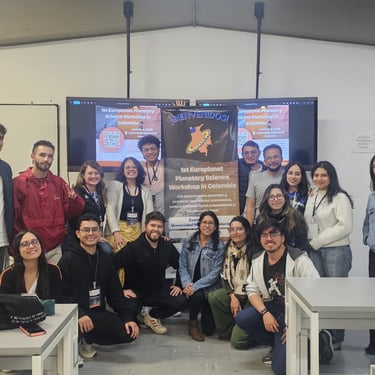
This workshop was held at the Department of Geosciences at the National University of Colombia from June 3 to 6, 2025. The event was divided into two parts: a series of keynote sessions and a hands-on course on planetary data. The first part featured 18 speakers—12 from Colombia and 7 from other Latin American countries and Spain—covering areas such as planetary geology, astrobiology, exoplanets, and asteroid studies. The practical component lasted 8 hours and covered topics including the downloading, processing, and mapping of planetary data. There were 227 registrations, reaching participants from different countries, educational levels, and fields of knowledge. Notably, several attendees travelled in person from other cities (Medellín, Bucaramanga, and Tunja). The interest expressed by both participants and speakers in strengthening the planetary sciences network in Colombia and Latin America is especially worth highlighting.